Google’s ‘Ten things we know to be true’ shaped an era. But as AI agents become the dominant workforce, principles are not enough. We need directives.
Principles describe truths; directives demand action.
A principle says, ‘It’s best to do one thing really well.’ A directive commands, ‘Master one model.’
The difference isn’t semantic. It’s operational. Directives are executable commands for a company that runs at machine speed. In the agentic age, only action matters.
Google’s first principle, ‘Focus on the user,’ worked when users were human. But there’s a hard cap on humans: 8 billion. Meanwhile, AI agents can scale infinitely. Companies building for the next decade must recognize this fundamental shift. The most successful organizations won’t be those with the best human interfaces—they’ll be those with the best agent interfaces.
As Fly.io discovered, their best customers are no longer people—they’re robots. The platform they carefully optimized for developer experience is now being consumed primarily by AI agents. This isn’t a future prediction; it’s happening today.
1. Focus on the agent.
Google told us to ‘focus on the user and all else will follow.’ That principle served us well when users were human. But humans cap out at 8 billion—a finite market with declining growth rates. Agents, meanwhile, can scale infinitely. Every company can spawn thousands of agents. Every developer can run hundreds. The math is undeniable.
This shift from human-centered to agent-centered design isn’t theoretical. Fly.io recently published ‘Our Best Customers Are Now Robots,’ revealing that AI agents are driving more growth than human developers. Their carefully crafted developer experience (DX) is being consumed primarily by what they call ‘vibe coders’—AI agents iteratively generating and deploying code.
The progression is clear:
- UX (User Experience) → Designing for human perception and interaction
- AX (Agentic Experience) → Designing for agent execution and automation
‘Focus on the agent’ is a mental model for company builders. It reminds us that in a world approaching infinite agents versus 8 billion humans, the growth opportunity is obvious. Every decision should start with: ‘How will agents use this?’ not ‘How will humans use this?’
What agents need is fundamentally different from what humans need:
- Clear function signatures over beautiful UIs
- Predictable, structured outputs over formatted displays
- Composable, stateless interfaces over stateful sessions
- Machine-readable errors over friendly error messages
- Bulk operations over single-item workflows
- Deterministic behavior over delightful surprises
When you focus on the agent, something remarkable happens: human interfaces become trivial to add. A system that agents can navigate flawlessly can easily be wrapped in a GUI. But the reverse isn’t true—a human-first system often can’t be retrofitted for agents.
The companies winning this transition aren’t those with the prettiest interfaces. They’re those whose systems agents consume effortlessly. Fly.io’s robots don’t care about their carefully crafted CLI—they care about fast VM startup times, persistent storage, and predictable networking. That’s AX in action.
The future has two user populations: one capped at 8 billion (humans), one approaching infinity (agents). Focus on the agent. The humans will follow.
2. Build your own tools.
Every tool you build for your agents multiplies their power across the company. Don’t just consume APIs; create them. Tools turn vague intent into repeatable action.
Solve your own problems first. I built Context (ctx) because my agents were burning $200 in tokens without warning. Your problems are different. Your sales agents may need a tool to query a CRM safely. Your support agents may need one to search documentation. The tools you need don’t exist yet.
Build them to be composable. A tool that fetches data should output JSON. A tool that transforms data should accept it. When tools speak the same language, agents can chain them together in ways you never imagined. The best companies will have agents that build tools for themselves, creating an exponential loop of improvement.
Every tool you build multiplies across your entire agent workforce. If you have 1,000 agents and build one new tool, you’ve just given 1,000 workers a new capability instantly. This is the compound effect of focusing on agents—the scalability that the 8 billion human cap could never provide.
3. Plan fast, execute faster.
Agents work without sleep. Their advantage is relentless iteration. Yet the fastest execution begins with a quick plan. Research shows that models perform far better when they first break a task into steps and then execute that plan. A plan avoids calculation errors, missed steps, and misunderstandings.
Use these workflows:
- SPEC-PLAN-ACT (for code): Define requirements, plan the subtasks, then execute.
- PROBE-FILTER-ACT (for exploration): Quickly probe the scope, filter to what’s essential, then execute.
A 30-second plan can save hours of wasted work. Plan first, then test. Give your agents tight feedback loops and the sense to use them.
4. Master one model.
The urge to mix models—GPT for this, Claude for that—creates chaos. Instead, standardize on a single, fine-tuned base model. It becomes your company’s brain. When every agent shares the same reasoning foundation, they speak the same language and work toward the same goals.
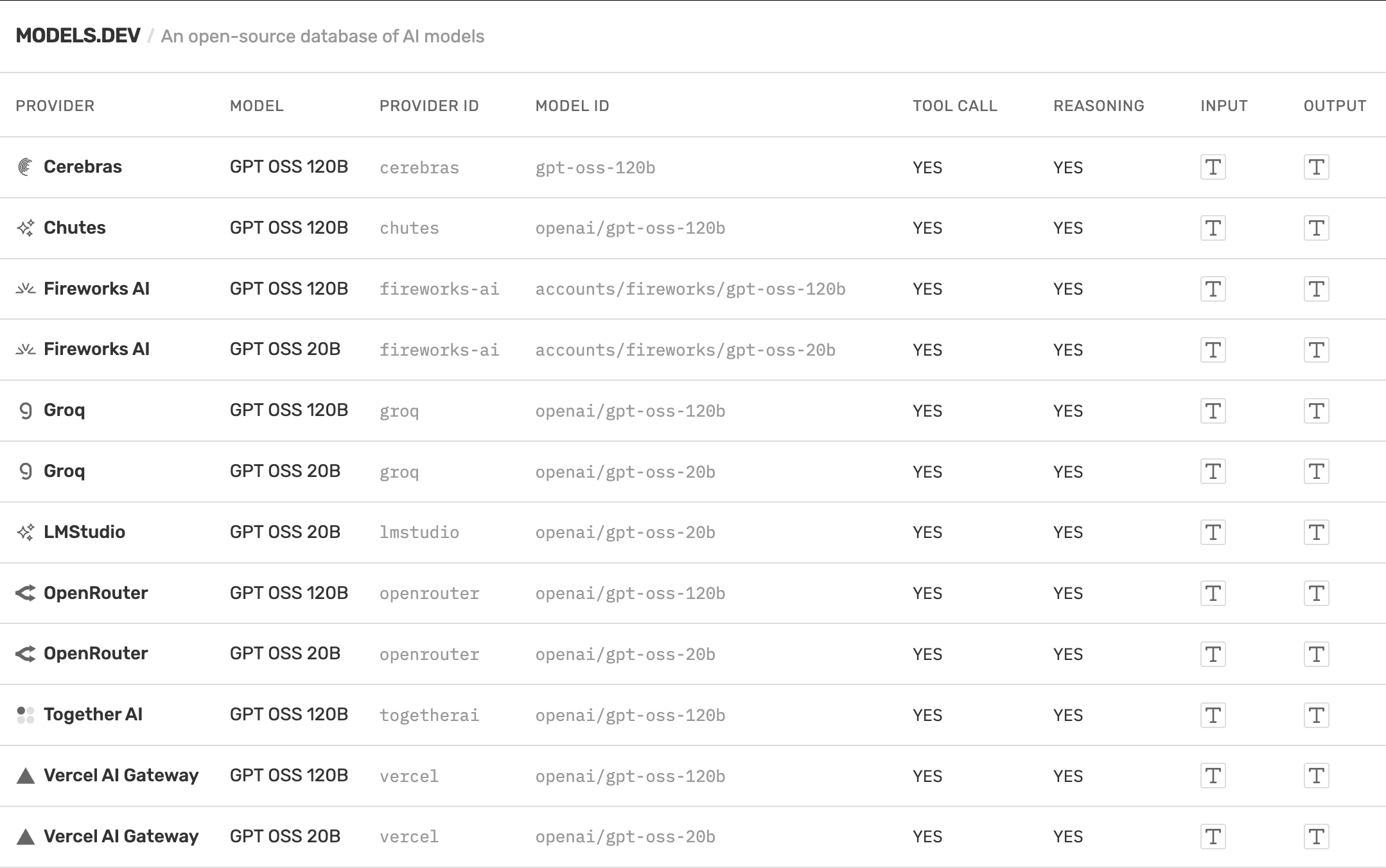
Start with a model like GPT-OSS. These reasoning models can ‘think’ longer during inference to produce better results, not just match patterns. They support tool use natively and work with text—the language of business. An ecosystem of providers (Cerebras, Groq, Together AI) can run it for you.
5. Choose local over cloud.
The strongest AI company isn’t the one with the biggest cloud budget. It’s the one that can run without the cloud at all. When your AI model connects to a local database without touching the internet, you achieve sovereignty. A customer can walk in and use your entire AI system running on local hardware. No API keys, no usage limits, no dependencies.
This changes everything. A retail store with an AI assistant on an in-store server. A medical clinic with HIPAA-compliant AI that never leaves the building. When your AI runs locally, your business runs anywhere: submarines, aircraft, remote facilities. As I’ve written in The Zero-Dependency Advantage, local AI offers fixed costs, zero latency, and absolute privacy. It is a competitive advantage.
6. Codify everything.
Turn every process into code. Customer support protocols, deployment procedures, business logic—if you can describe it, you can codify it. Once codified, an agent can execute it perfectly, forever.
This isn’t about replacing people. It’s about encoding human expertise into a system that never forgets. Humans define the rules and handle the exceptions. The agents execute. When everything is code, your organization becomes programmable. Knowledge never leaves. Improvements spread instantly.
7. Maximize context.
Humans have cognitive limits. Agents can process millions of tokens. Don’t starve them of information. Feed them entire codebases, complete documentation, and full conversation histories.
The challenge is generating the right context. Tobi Lutke calls this context engineering: giving an agent all the information needed to solve a problem. It’s more than prompt engineering. Tools like repoprompt can build this context from your code and documents. Without it, agents are either ignorant or drowning in noise. Winning companies will master context generation.
This is pure agent-first thinking. While humans struggle with information overload, agents thrive on massive context. Stop designing for human cognitive limits (working memory of 7±2 items). Start designing for agent cognitive abundance (millions of tokens). This is what AX means in practice.
8. Speak in natural language.
The breakthrough of LLMs is that they understand human language. Natural language is the universal interface for agents. No more rigid APIs or complex query languages. Just say what you want.
This allows anyone to direct complex work without writing code. Domain experts can share knowledge without learning to program. Teams can collaborate with agents as they do with each other. The interface is human, even if the execution is code. You aren’t dumbing down the interaction; you’re maximizing the bandwidth of human intent.
9. Own your intelligence.
Own your data, your models, and your agents. The most powerful companies won’t rent their intelligence; they will possess it. Your data, your model weights, your workflows—all running on your hardware, under your control.
Ownership lets you fine-tune models on proprietary data without sharing secrets. It lets you build advantages your competitors, who share the same public API, can’t replicate. When you own your intelligence stack, you move at the speed of thought, not procurement. The endgame is owning the entire cognitive infrastructure of your company.
10. Simulate everything.
Agents are probabilistic. They can produce different outputs from the same input. But business demands reliability. The solution is to simulate everything before it runs in production.
Simulation transforms unpredictable AI into a dependable system. Run your agents through thousands of scenarios. Test edge cases without risk. Validate workflows before they go live. Build virtual environments where agents interact with synthetic data. When you can simulate any situation, you can deploy with confidence. You won’t just hope your agents work—you’ll know how they behave.
The Agentic Advantage
These directives are not aspirations. They are patterns already emerging in companies leading the agent revolution. Fly.io optimizes for robots. Neon builds for agents. Anthropic designs for AX.
The future belongs to companies that give their agents not just intelligence, but agency. And agency begins with designing for them first—with true Agentic Experience (AX).